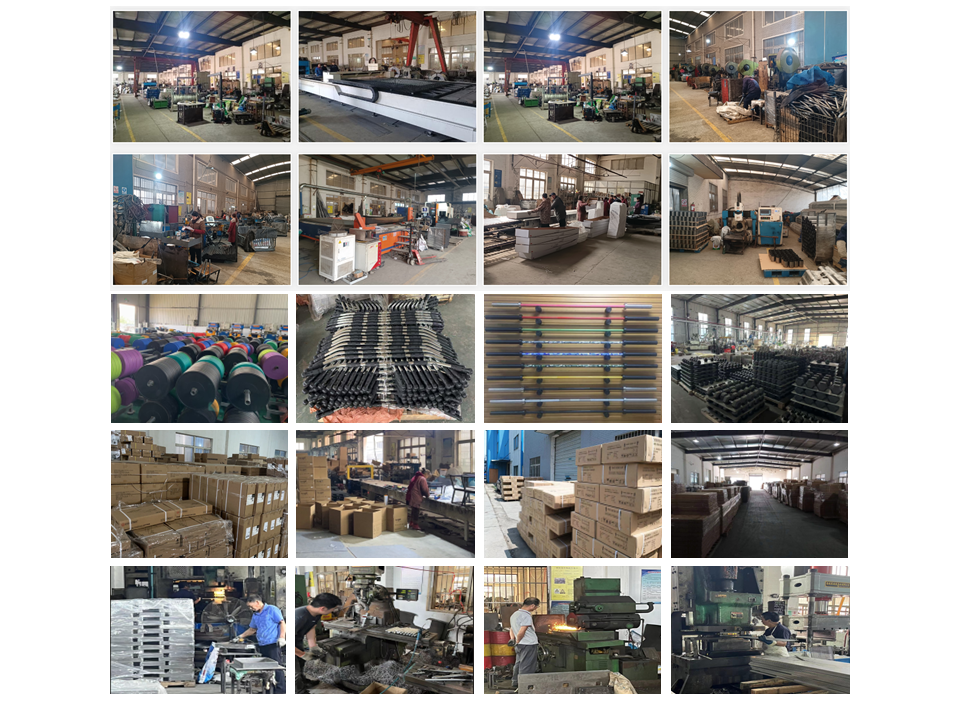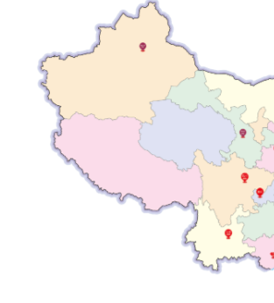
If you operate a global fitness & sports goods business, sourcing the right fitness equipment from matching Chinese manufacturing hubs directly determines your product cost, quality compliance, delivery timeline and end-market profitability.
Most overseas gym distributors, cross-border e-commerce sellers, gym project contractors and private fitness brand purchasers encounter costly sourcing mistakes simply because they select manufacturers from mismatched industrial zones.
This practical, all-in-one sourcing guide breaks down China’s five dominant fitness equipment industrial clusters, covering core product lines, competitive strengths, inherent limitations, and ideal buyer personas for each region, alongside universal industry pitfalls and actionable risk-mitigation strategies.
1. Nantong, Jiangsu – China Export Base for Free Weights & Functional Training Gear
A. Regional Industrial Profile
Over 90% of local manufacturers operate purely export-oriented production lines, forming the country’s largest concentrated cluster for weighted fitness accessories.
B. Core Product Portfolio
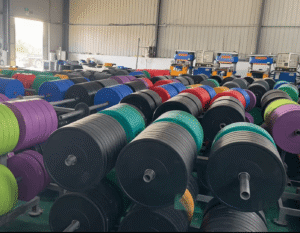
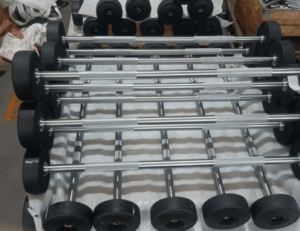
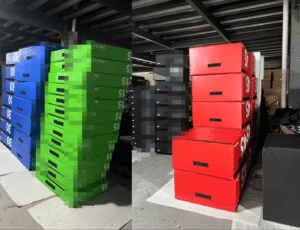
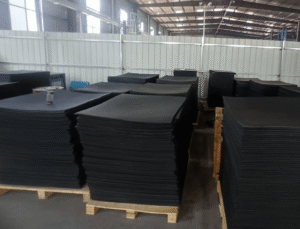
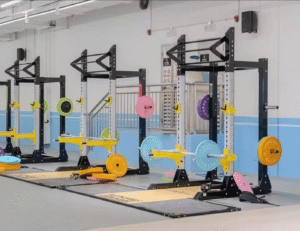
Rubber/TPU/CPU/TPE/PVC coated dumbbells & weight plates, gym rubber flooring, wall balls, medicine balls, complete HYROX & CrossFit functional training accessories, light commercial training racks, workout benches etc
The region boasts a fully closed-loop local supply chain: in-house ductile iron casting, PU injection molding, one-piece rubber coating, rubber vulcanization workshops, plus integrated packaging, custom printing and consolidated container logistics support.
C. Key Competitive Advantages
1. Superior weight manufacturing technology: High-density ductile iron castings free of sand holes; eco-friendly odorless PU coating that fully complies with EU REACH and RoHS environmental standards, meeting entry requirements for high-end European & American fitness facilities.
2. Unmatched customisation flexibility: Engraved brand logos, custom weight calibrations, exclusive custom coating colours, adjustable rubber hardness, and neutral or branded colour packaging boxes all available on demand.
3. Optimised port logistics: Direct access to Nantong, Shanghai and Ningbo seaports; ultra-low costs for small consolidated LCL shipments and prototype sample orders.
4. Professional export teams: In-depth expertise on global trade terms and national tariff regulations, with decades of market experience serving Europe, the United States and Australia.
D. Disadvantages & Limitations
1. Large-scale commercial strength machines, smart treadmills and supporting motor & electronic control components must be sourced externally.
2. No price competitiveness for large home-use cardio equipment.
E. Ideal Target Buyers
CrossFit & HYROX specialist gym operators, weighted fitness goods wholesalers, cross-border fitness e-commerce merchants, and bulk accessory purchasers for full gym fit-out projects.
2. Ningjin, Shandong – National Manufacturing Hub for Full-Set Commercial Gym Equipment
A. Regional Industrial Profile
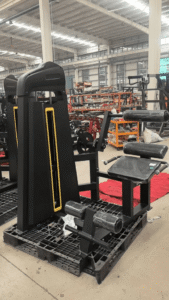
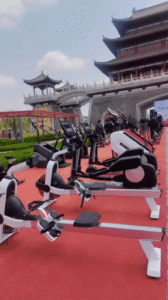
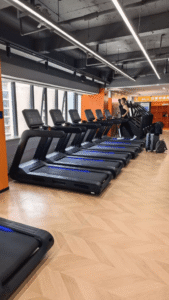
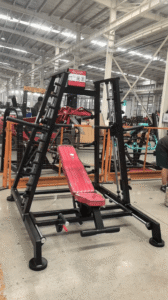
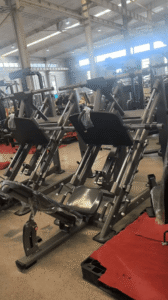
Over 50% of all commercial strength machines circulating globally are manufactured within this region, supported by more than 3,000 upstream and downstream auxiliary enterprises with over 95% local component self-sufficiency.
B. Core Product Portfolio
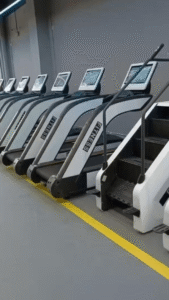
Full-range commercial strength equipment, multi-functional training stations, fixed resistance machines, commercial treadmills and professional spin bikes.
C. Key Competitive Advantages
1. Heavy-duty commercial build quality: Standardised 3mm thick national standard steel tubing, fully automatic robotic welding for fatigue resistance and high load-bearing capacity, engineered for 24/7 non-stop operation in Western commercial gyms.
2. One-stop full gym fit-out service: Complimentary 3D gym layout design, equipment matching proposals and consolidated full-container delivery solutions.
3. Comprehensive certification credentials: Tier-one factories hold CE, TUV and ISO9001 accreditations with complete commercial safety test reports to enable smooth customs clearance worldwide.
D. Disadvantages & Limitations
1. Unfavourable cost positioning for small weighted accessories and yoga auxiliary gear; high minimum order quantities apply to most product lines.
2. Higher labour and factory overheads translate to higher overall unit pricing compared to manufacturers in Nantong, Yongkang and Hebei.
3. Uneven factory quality tiers across the region: Low-cost workshops cut corners on steel pipe thickness and utilise low-density foam padding, leading to persistent equipment noise and structural deformation after prolonged use.
E. Ideal Target Buyers
Commercial fitness equipment wholesalers, hotel & apartment amenity suppliers, and government public fitness infrastructure project contractors.
3. Yongkang, Zhejiang – Premier Supply Base for Home Cardio & Affordable Cross-Border Fitness Merchandise
A. Regional Industrial Profile
China’s number-one manufacturing hub for Amazon and cross-border e-commerce fitness bestsellers, featuring thousands of small-scale home fitness assembly factories focused on mass retail market products
B. Core Product Portfolio
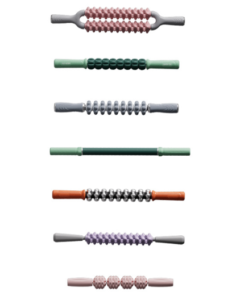
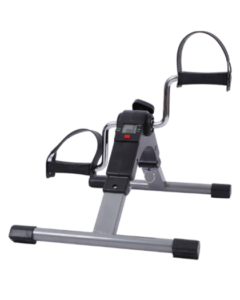
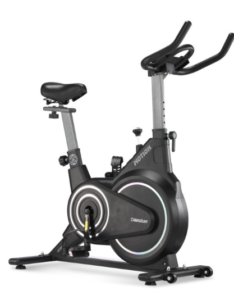
Foldable home treadmills, portable spin bikes, resistance bands, skipping ropes, hand grippers and lightweight home workout accessories, all engineered for fast-moving cross-border retail catalogues.
C. Key Competitive Advantages
1. Rapid mould development & sampling: New overseas trend replication and custom mould creation completed within just 7 days to align with global consumer demand cycles.
2. Exceptional cost-performance ratio: Identical specification products priced 20%–30% lower than equivalents from Shandong and Nantong, perfectly suited for value retail channels.
3. Flexible minimum order requirements: Low mixed-batch thresholds for small accessories; small trial orders accepted for full home cardio machines, ideal for micro and medium cross-border sellers.
4. Streamlined logistics: Proximity to Ningbo Port delivers low LCL freight rates and consistent shipment lead times.
D. Disadvantages & Limitations
1. Severe industry price competition driving compromised raw material standards: Many small workshops utilise recycled plastic, thin-walled tubing and low-grade rubber resulting in shortened product lifespans.
2. No heavy casting or thick-wall welding production capacity, unable to manufacture high-load commercial-grade fitness machinery.
3. Minimal original design output; rampant copycat production of trending items creates significant intellectual property risks for brand owners.
4. Low-tier product lines frequently fail EU odour and heavy metal environmental compliance testing, risking customs detention.
E. Ideal Target Buyers
Cross-border independent website & Amazon merchants, overseas supermarket fitness sections, discount retail chain stockists and home fitness specialty retailers.
4. Dingzhou & Bazhou, Hebei – Ultra-Low-Cost Entry-Level Metal Fitness Equipment Cluster
A. Regional Industrial Profile
China’s primary manufacturing zone for budget entry-level metal fitness goods, supported by local integrated steel mills enabling rock-bottom raw material pricing.
B. Core Product Portfolio
Budget painted dumbbells, standard painted weight plates, simple home training racks, outdoor public fitness stations and basic low-cost workout accessories, designed for mass bulk volume orders.
C. Key Competitive Advantages
1. In-house raw material supply chain: Direct access to local steel mills delivers nationally unbeatable base material costs.
2. Abundant mass-production capacity with unrivalled pricing for large-volume stocking orders.
D. Disadvantages & Limitations
1. Outdated surface coating technology leading to rapid paint chipping, rust formation and inferior visual finish.
2. Underdeveloped export support infrastructure; most local factories lack dedicated certification and document teams, elevating customs clearance risks.
3. No unified factory quality control benchmarks, resulting in high rates of cosmetic defects and inaccurate weight tolerances.
4. Strictly entry-level product positioning, disqualifying goods from mid-to-high-end commercial fitness distribution channels.
E. Ideal Target Buyers
Overseas discount warehouse supermarket stockists, municipal outdoor fitness infrastructure tender contractors and low-budget bulk wholesale distributors.
5. Dongguan, Foshan & Shenzhen (Pearl River Delta, Guangdong) – Premium Smart & Rehabilitation Fitness Equipment Hub
A. Regional Industrial Profile
The exclusive Chinese production cluster for high-end internet-connected and physical rehabilitation fitness machinery, leveraging the Greater Bay Area’s complete electronics manufacturing ecosystem.
B. Core Product Portfolio
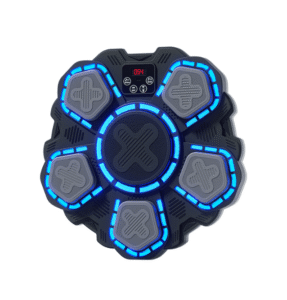
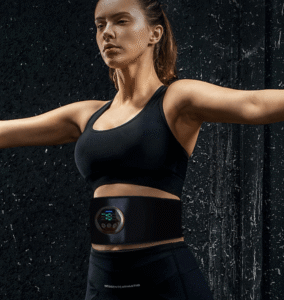
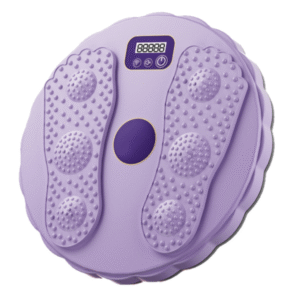
Smart connected treadmills, interactive spin bikes, medical rehabilitation training apparatus, APP-linked cardio equipment and luxury home fitness machines, supported by local integrated electronic component supply chains.
C. Key Competitive Advantages
1. Unmatched smart hardware integration: In-house production of Bluetooth modules, sensor chips, touch display panels and drive motors; full customisation of proprietary brand mobile applications, equipment UI interfaces and interconnected workout ecosystems.
2. Premium aesthetic manufacturing capability: Precision injection moulding and bespoke exterior design services with mature OEM/ODM support for luxury fitness brands, enabling significant retail price premium potential.
3. Fully compliant international export frameworks: Products meet access standards for premium Western residential and rehabilitation fitness venues, with well-established branded export service workflows.
D. Disadvantages & Limitations
1. Nation-leading labour and factory rental overheads create substantially higher unit pricing versus the four alternative industrial zones.
2. Insufficient local capacity for cast iron weights and heavy commercial steel frames; bulk weighted accessories must be sourced from Nantong manufacturers.
E. Ideal Target Buyers
Global smart fitness brand operators, medical rehabilitation institutions, premium boutique gym chains and luxury residential fitness equipment brands.
Universal Industry Pain Points All Global Fitness Sourcing Buyers Must Avoid
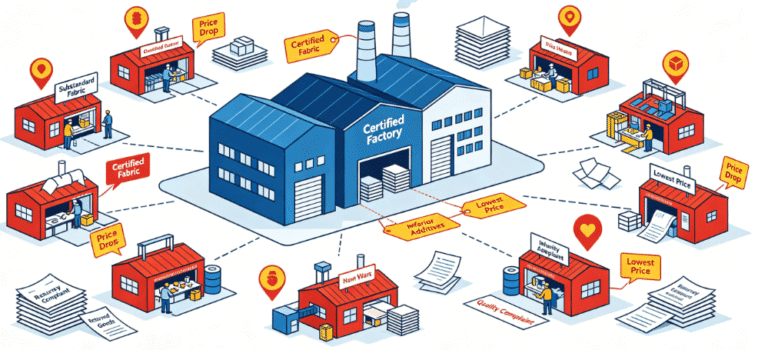
1. Fragmented Quality Control & Low-End Price Competition
Top-tier certified manufacturers account for less than 20% of total market share. Unregulated small workshops systematically cut raw material and production standards to undercut pricing; purely cost-based procurement inevitably triggers costly after-sales failures and product returns.
2. OEM-Dominant Production, Limited Independent Brand Output
The vast majority of Chinese factories operate solely as white-label OEM producers for overseas brands. Few domestic manufacturers own internationally recognised fitness trademarks, meaning end-market profit margins remain concentrated with foreign trade distributors rather than production facilities.
3. Escalating International Trade Barriers
Heightened import tariffs imposed by the United States, continuously tightened EU environmental compliance regulations, and growing low-cost order diversion to Southeast Asian manufacturing hubs compress profit margins for cross-border fitness merchants.
4. Geographically Specialised Production Limitations
No single industrial zone delivers low-cost sourcing for the full spectrum of fitness equipment categories. Multi-product procurement requires cross-region consolidated container shipments, increasing logistical coordination complexity.
5. Pervasive Copycat Product Design
Fast replication of trending fitness equipment designs is widespread among small workshops in Yongkang and Hebei. Brand owners must execute non-disclosure agreements and register exterior design patents prior to placing mass production orders to safeguard intellectual property.
Simplified Sourcing Location Formula for Global Fitness Purchasers
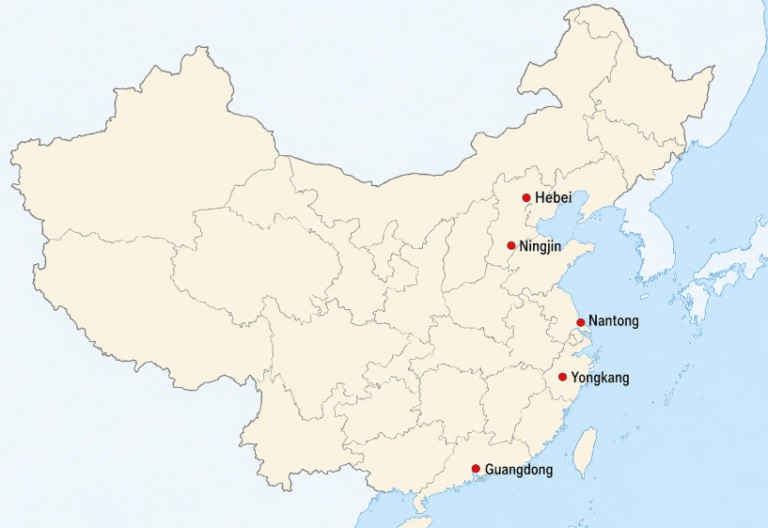
• Full commercial gym strength equipment fit-out projects = Ningjin, Shandong
• Dumbbells, kettlebells, weighted plates & functional training small accessories = Nantong, Jiangsu
• Home cardio machines & affordable cross-border retail fitness goods = Yongkang, Zhejiang
• Premium smart & rehabilitation fitness machinery = Pearl River Delta (Guangdong)
• Ultra-budget outdoor & basic metal fitness equipment = Dingzhou & Bazhou, Hebei
Three Critical Risk-Mitigation Sourcing Guidelines
1. Tiered Factory Selection Strategy
Prioritise A-grade manufacturers with self-owned production workshops, complete international compliance certifications and verified global exhibition participation. Avoid unlicensed small-scale workshops without formal quality inspection protocols.
2. Lead Time Forecasting
• In-stock finished goods: 7–15 day shipment turnaround
• Custom OEM & ODM production orders: 30–45 day manufacturing lead time
• Annual Western holiday stocking season (September–December): All production lead times automatically extend by 15 days due to peak factory capacity utilisation
3. Pre-Order Compliance Verification
Request full material composition reports, environmental safety test certificates and complete customs clearance documentation prior to deposit payment to eliminate the risk of port detention and seized shipments.